
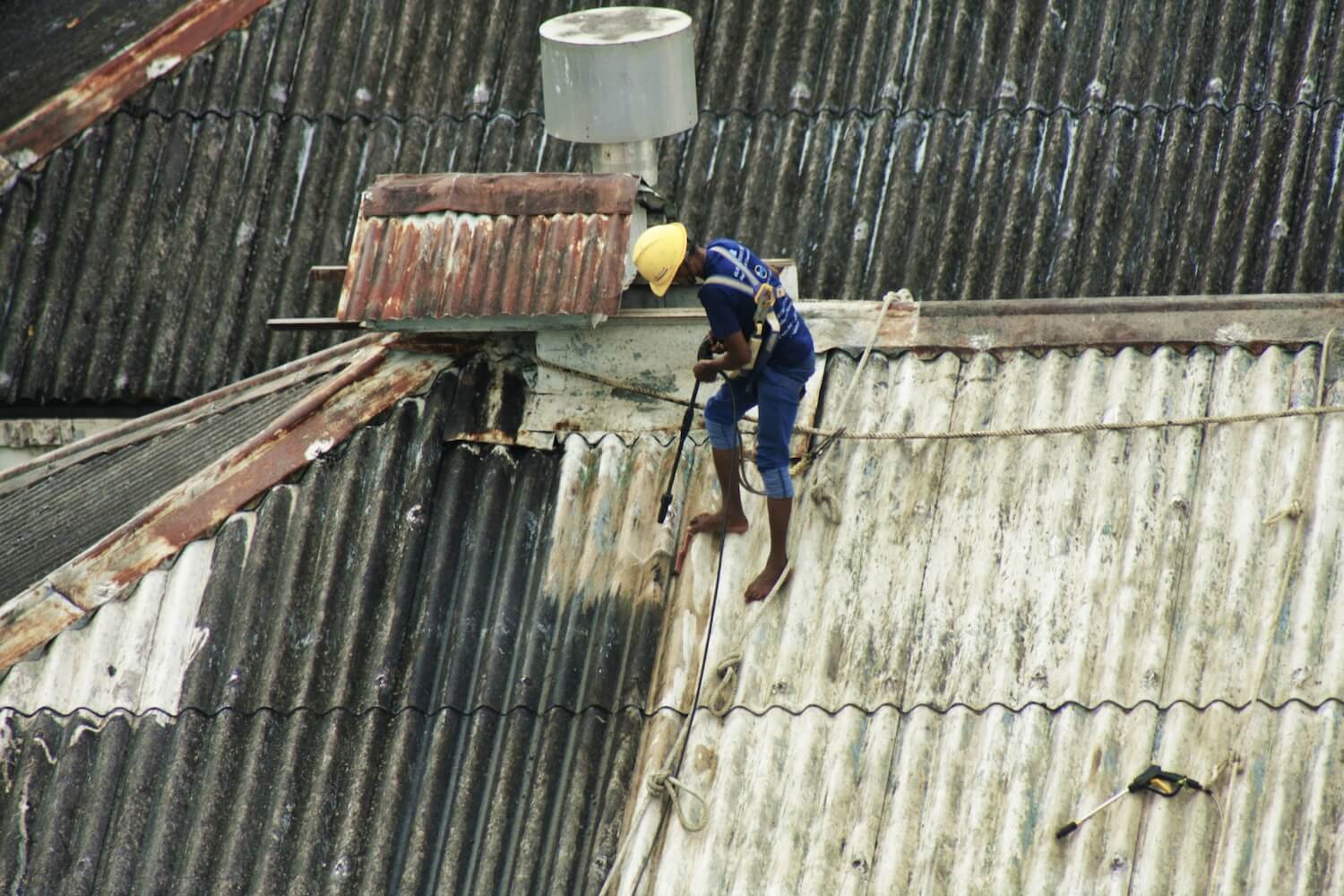
The Repair vs Replace Decision
One of the most common questions we face is: “Can’t you just patch it?” It’s a valid question. No one wants to spend $20,000 on a new roof if a $500 repair will suffice. However, making the wrong choice can be financially painful. Patching a dying roof is throwing good money after bad, while replacing a roof with years of life left is wasteful.
At Blue Peaks, we approach this decision not as salespeople, but as risk advisors. We use data, system age, and condition reports to guide you to the financially prudent choice.
Cost-Benefit Analysis: The “False Economy” of Repairs
Let’s look at a common scenario. A homeowner spends $800 to repair a leak around a chimney. Six months later, a pipe boot fails—another $600. The following spring, wind blows off brittle shingles—another $1,000. In 18 months, they have spent $2,400 patching a roof that still needs to be replaced. This is “false economy.”
Conversely, if a roof is only 8 years old and has a single puncture from a fallen branch, a repair is the obvious, smart choice. The key is understanding the Remaining Service Life of the entire system.
The 50% Rule: A Decision Framework
A widely accepted guideline in asset management is the 50% Rule. It states:
If the cost of repairs equals or exceeds 50% of the cost of a new roof (prorated by remaining lifespan), you should replace.
For example: A new roof costs $15,000. Your current roof is 15 years old (75% through its 20-year life). The “value” of the remaining life is low. If a repair costs $3,000, it might seem cheaper than $15,000, but you are investing heavily in an asset with almost no value left.
Remaining Service Life Assessment
We evaluate roofs based on their material and age data:
- 3-Tab Asphalt Shingles: 15-20 year life. (Repair window: Years 1-12)
- Architectural Asphalt Shingles: 20-25 year life. (Repair window: Years 1-18)
- Metal Roofing: 40-70 year life. (Repair window: Years 1-50)
If your asphalt roof is approaching year 20, the shingles become brittle. Walking on them to fix one leak often causes damage to surrounding shingles, creating a game of “whack-a-mole” with leaks.
System Integrity vs Spot Repairs
A roof is a system. Leaks are rarely isolated events; they are symptoms of systemic failure. If the flashing is rusted at one wall, it is likely rusted at all walls. If the sealant is dry-rotted at one pipe jack, it is dry-rotted at all of them. “Spot repairs” only address the symptom, not the systemic condition.
Documentation and Insurance Implications
If you have an old roof with multiple repairs, your insurance company may inspect it and deem it “uninsurable” or move it to an Actual Cash Value (ACV) policy. This means if a hail storm hits, they will pay you pennies on the dollar for it. Replacing the roof restores full Replacement Cost Value (RCV) coverage, protecting your asset.
Decision Framework
- Repair If: Roof is <15 years old, leak is isolated (puncture/flashing), shingles are pliable, and repair cost is <5% of replacement cost.
- Replace If: Roof is >20 years old, granules are bald, shingles are brittle/cracking, leak is widespread, or repair cost is >20% of replacement cost.
Fiduciary Case for Planned Replacement
Planned replacement is always cheaper than emergency replacement. It allows you to obtain multiple bids, schedule during the off-season for better pricing, and avoid the cost of emergency interior water damage remediation. Acting before failure is the hallmark of prudent homeownership.
“Clarity builds confidence. Confidence builds trust.”