
Categories
Hail Damage Insurance & Claims Maintenance & Repairs repair vs a full roof replacement Roofing Challenges Storm Damage

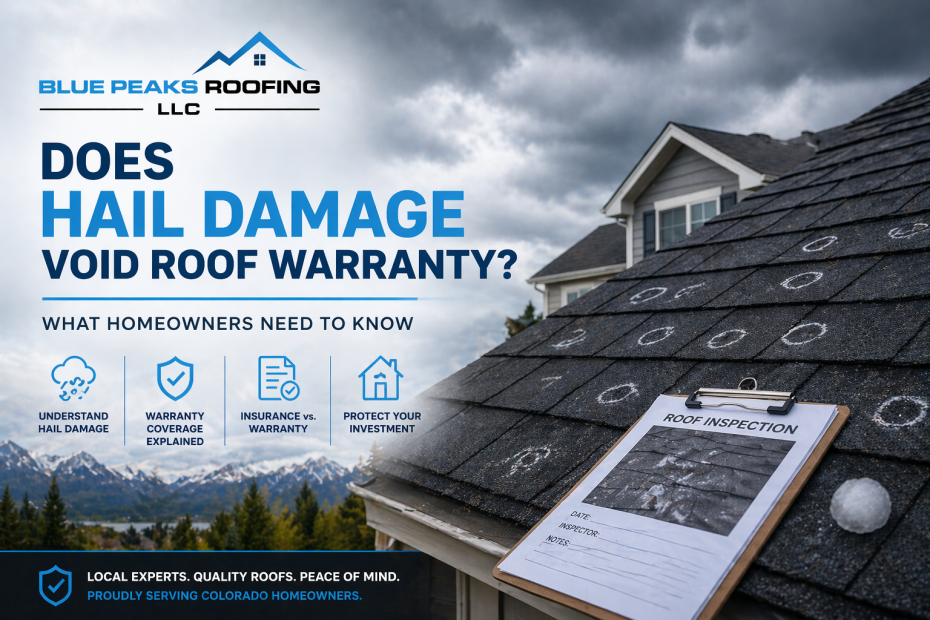
Does Hail Damage Void My Roof Warranty in Colorado?

Every spring in Colorado, we get a version of the same frantic call. A storm just rolled through. Hail the size of golf balls — or in some of Denver’s more dramatic moments, small citrus fruit — just spent 20 minutes beating the neighborhood like a drum. And somewhere between the weather alert on your phone and googling “is my roof ruined,” you land on this question:

Does hail damage void my roof warranty?

The short answer is no. The longer answer is the one that actually saves you money — so keep reading, we promise it’s worth it.

Surprise: You Have Two Warranties. Most People Don’t Know That.

When we replace a roof, you walk away with two separate protections. Almost nobody reads either one. We understand — warranty documents are written by people who attended law school specifically to make sure you don’t understand them. But here’s what you actually need to know:

  1. A manufacturer’s material warranty — covers the shingles themselves if they fail early
  2. A contractor’s workmanship warranty — covers how the roof was installed

Two documents. Two different companies. Two completely different things. Hail touches both — just not the way most people think.

The Manufacturer Warranty: What It Says vs. What You Think It Says

Shingle manufacturers — Atlas, TAMKO, Owens Corning — warranty their products against material defects. Abnormal cracking, premature granule loss, manufacturing failures. The kind of thing that happens because the shingle was a bad shingle — not because Colorado decided to throw frozen precipitation at your house at 70 miles per hour.

Hail is classified as “an act of nature.” It is explicitly excluded from essentially every manufacturer warranty on the market. So no — hail doesn’t void your manufacturer warranty. But it also absolutely will not be covered by it.

“But my shingles are still under warranty!” — Said by approximately 10,000 Colorado homeowners who were about to have a very disappointing phone call with their shingle manufacturer’s customer service line.

Your manufacturer warranty is there if your shingles fail on their own. Your homeowners insurance is there when a storm fails them for you. These are not the same bucket of money. Mixing them up is an expensive mistake that we watch people make every single spring.

The Workmanship Warranty: Here’s the Honest Version

Your workmanship warranty covers how the roof was built — flashing, nail patterns, underlayment, penetration seals. Blue Peaks backs every installation we do with one.

But here’s where we’ll be straight with you, because apparently not every contractor will be: acts of God void workmanship warranties. We cannot warranty a tornado. We cannot warranty a tree falling through your ridge at 2am on a Tuesday. If an extreme weather event physically destroys an installation, that’s not a workmanship failure — that’s nature doing what nature does, and no roofing contractor on earth covers that. Anyone who tells you otherwise is lying to make a sale.

What a workmanship warranty does protect is everything that fails because of how the roof was built — not because of what the sky threw at it. And here’s where it gets interesting: sometimes a storm reveals a workmanship problem that was already quietly sitting there. Improperly sealed flashing, for example. Water finds it during a hard rain and suddenly you’ve got a leak. The storm didn’t create the bad flashing — it just gave it a reason to finally introduce itself. That’s still a workmanship issue. Your contractor is still on the hook for it.

We’ve found that on other companies’ roofs more than once. It’s uncomfortable for everyone involved — except us.

The Real Financial Risk Nobody’s Talking About: Your Deductible

This is the conversation that actually matters. And almost nobody is having it until it’s too late — usually while standing in a driveway staring at a check that’s a lot smaller than expected.

Most Colorado homeowners insurance policies now carry a separate wind and hail deductible. It’s not your standard $1,000 or $2,500 deductible. It’s percentage-based — typically 1 to 2 percent of your dwelling coverage. On a $600,000 home, that’s $6,000 to $12,000 out of your own pocket before your insurance writes dollar one.

The move? Upgrade to a Class IV impact-rated shingle on your next replacement. Many Colorado carriers drop your premium by 20 to 30 percent for Class IV materials. Atlas and TAMKO both make them. We install them constantly. The discount usually pays for the upgrade in a few years — and then just keeps paying you back every single renewal.

A five-minute call that’s worth making:Before your next roof replacement, ask your insurance agent: “If I upgrade to Class IV impact-rated shingles, what happens to my premium?” In Colorado, the answer is almost always good news. Call SCC Insurance at (303) 587-9582 if you want a straight answer from someone who actually knows their stuff.

What To Do After a Hailstorm — In the Right Order

  1. Get a professional inspection before you call your insurance company. Know what’s on your roof before an adjuster tells you what they think they see. Our inspections are free and we document everything with photos. Go in prepared, not reactive.
  2. File your claim promptly. Colorado policies typically give you 1–2 years from the storm date. Hail damage that sat uninspected for 18 months has a funny way of becoming “wear and tear” in the eyes of an insurance company. Don’t let the clock run out on you.
  3. Have your contractor present when the adjuster comes out. You have the right to this. Use it. Adjusters are professionals, but they’ve got five more roofs after yours and they move fast. We’re there to make sure nothing gets left off the list.
  4. Review the scope before you sign anything. Missing line items are common. Missing line items are money. We go through every one before our clients sign a thing.

Bottom Line

Hail doesn’t void your warranty. But a roof that took a beating, went uninspected for a season, and now has moisture quietly working through compromised shingles is going to be a much harder claim to make when you finally get around to it.

We’ve been doing this since 2019. Our team members are licensed insurance adjusters. We know exactly what the insurance company is looking for — because we trained to look for the same things.

If there’s been a storm in your area in the last two years and nobody’s been on that roof, call us. The inspection is free. The conversation is honest. And we’ll tell you straight whether there’s a claim worth making.

Free inspection. No pressure. We know what adjusters look for — because we are adjusters.

(303) 808-0687

Blue Peaks Roofing · Littleton, CO · bluepeaksroofing.com · Mon–Sat 8AM–5PM
About Blue Peaks RoofingBlue Peaks Roofing LLC has been serving the Denver metro since 2019. Our team members are licensed insurance adjusters — we handle the entire claim process from first inspection to final check. BBB A+ rated. 5.0 stars on Google. Littleton, CO.

Categories
Insurance Roof Repair Roof Replacement Storm Damage

Will Homeowners Insurance Cover Storm Damage to My Roof? Complete Coverage Guide 2025

Question: Will homeowners’ insurance cover roof damage from storms, hail, or wind?

Answer: Yes, homeowners’ insurance typically covers roof damage from sudden weather events like hail, wind, and falling trees—but only if you can prove the damage was caused by a covered peril, not normal wear and tear. Success depends on proper documentation, timing, and understanding your specific policy terms.

What Storm Damage Insurance Actually Covers

Most standard homeowners’ policies cover roof damage from these sudden weather events:

  • Hail damage (any size, but golf ball-sized creates obvious claims)
  • Wind damage from storms with speeds over 50-60 mph
  • Falling trees or branches during storms
  • Ice dam damage from rapid freeze-thaw cycles
  • Lightning strikes that damage roofing materials
  • Tornado or hurricane damage in covered areas

Coverage typically includes: Material replacement, labor costs, temporary repairs, and debris removal. Most policies also cover interior damage caused by roof leaks from covered storm events.

Important caveat: Your roof must have been in good condition before the storm. Insurance adjusters will look for pre-existing issues that could void your claim.

What Insurance Won’t Cover: Critical Exclusions

Understanding exclusions prevents claim denials and costly surprises:

Normal Wear and Tear:

  • Granule loss from aging (typically after 15-20 years)
  • Cracked or curled shingles from sun exposure
  • Gradual leaks are developing over time
  • Moss or algae growth damage

Maintenance-Related Issues:

  • Damage from clogged gutters or poor drainage
  • Problems from missing or inadequate flashing
  • Leaks from unsealed penetrations (vents, chimneys)
  • Structural issues from deferred maintenance

Policy-Specific Exclusions:

  • Cosmetic damage that doesn’t affect function
  • Damage below your deductible amount
  • Secondary damage from uncovered perils
  • Improvements beyond original specifications

How to Document Storm Damage Properly

Proper documentation makes the difference between claim approval and denial:

Immediate Steps (Within 24-48 Hours):

  1. Take photos from ground level of visible damage
  2. Document interior leaks with photos and videos
  3. Note the storm date and time with weather reports
  4. Cover exposed areas with tarps to prevent further damage
  5. Keep receipts for emergency repairs

Detailed Documentation:

  • Photograph damage from multiple angles
  • Include close-ups of specific problem areas
  • Document any debris or impact marks
  • Take “before” photos if available from recent home sales/inspections
  • Record wind speeds and hail size from local weather reports

Professional Documentation: Schedule an inspection within 72 hours of the storm for optimal claim success rates.

The Professional Inspection Process

A qualified roofing contractor’s inspection strengthens your insurance claim significantly:

What Inspectors Look For:

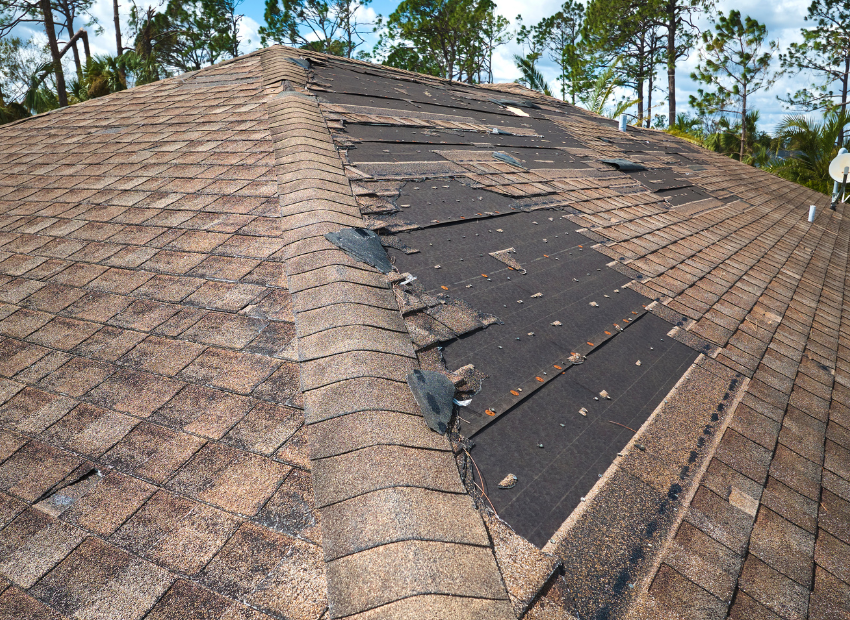
  • Impact marks on shingles, gutters, and vents
  • Granule loss patterns consistent with hail damage
  • Exposed mat or substrate indicating functional damage
  • Structural damage to decking or support systems
  • Secondary damage to flashing, skylights, and penetrations

Inspection Report Should Include:

  • Detailed damage assessment with measurements
  • Professional photos with explanatory notes
  • Estimated repair/replacement costs
  • Recommendations for temporary vs. permanent repairs
  • Timeline for completion

Red Flag: Avoid contractors who offer to “eat your deductible” or guarantee claim approval—this is insurance fraud.

Understanding Your Policy’s Fine Print

Key policy details that affect storm damage coverage:

Replacement Cost vs. Actual Cash Value:

  • Replacement Cost: Pays the full amount to replace with similar materials
  • Actual Cash Value: Pays replacement cost minus depreciation
  • Difference: Varies on a typical roof replacement

Deductible Structure:

  • Standard deductible: Varies
  • Wind/hail deductible: Often 1-5% of the home’s insured value
  • Hurricane deductible: Separate, higher amount in coastal areas

Coverage Limits:

  • Maximum payout amounts for roofing materials
  • Restrictions on upgrade allowances
  • Limits on temporary living expenses during repairs

Timeline Considerations for Storm Damage Claims

Timing significantly impacts claim success:

Critical Deadlines:

  • Report claims within 1 year of storm date (varies by state)
  • Emergency repairs: Must be completed within 30-60 days
  • Final repairs: Typically must begin within 365 days of approval

Optimal Filing Timeline:

  • 0-72 hours: Document damage and contact the insurer
  • 1-7 days: Professional inspection and estimate
  • 7-14 days: File formal claim with all documentation
  • 30-60 days: Adjuster inspection and settlement negotiation

Seasonal Considerations: Claims filed during peak storm season (spring/early summer) may face longer processing times due to volume.

Red Flags That Threaten Your Claim

Avoid these common mistakes that lead to claim denials:

  • Delaying claim filing beyond reasonable timeframes
  • Making major repairs before the adjuster inspection
  • Accepting the first settlement offer without contractor review
  • Using unlicensed contractors for claim-related work
  • Failing to document the pre-storm roof condition
  • Not disclosing previous roof repairs or claims

When to Call Insurance and Roofing Professionals

Contact your insurance company immediately if:

  • Interior leaks develop after storms
  • Neighbors are filing similar claims
  • Local weather reports confirm damaging conditions

Contact roofing professionals for:

  • Emergency tarping and temporary repairs
  • Detailed damage assessments for insurance claims
  • Independent estimates to compare with adjuster assessments
  • Guidance on policy interpretation and claim strategy

Bottom Line: Your Claim Success Strategy

File a claim if:

  • Storm damage is visible and functional (not just cosmetic)
  • Estimated repairs exceed your deductible
  • You can document the specific storm event
  • Your roof was in good condition pre-storm

Don’t file a claim if:

  • Damage is clearly from normal wear and tear
  • Repair costs are close to or below your deductible
  • You’ve filed multiple recent claims (rate impact risk)
  • Damage is purely cosmetic with no functional impact

Your Next Steps for Storm Damage Claims

  1. Review your current policy to understand coverage limits and deductibles
  2. Document your roof’s current condition with photos for future reference
  3. Create a storm response plan with contact information for trusted contractors
  4. After any storm: Inspect immediately and document any visible damage
  5. Contact both your insurer and a qualified contractor within 72 hours of suspected damage
  6. Keep detailed records of all communications and expenses throughout the process

Success with insurance claims requires prompt action, proper documentation, and professional guidance to navigate the complex process effectively.